Traditional use
Shilajit has been part of Ayurveda, the traditional medicine of India, for thousands of years, where it is counted among the traditional rasayana preparations. It is traditionally dissolved in warm water or milk. Its best-known compound is fulvic acid, formed as microbes break down plant material. Modern research is early and mostly small studies, so we share it as a traditional ritual, not a remedy.
Preparations
- Resin: a pea- or rice-grain-sized piece dissolved in warm water or tea.
- Drops: purified resin dissolved in water, easy to measure.
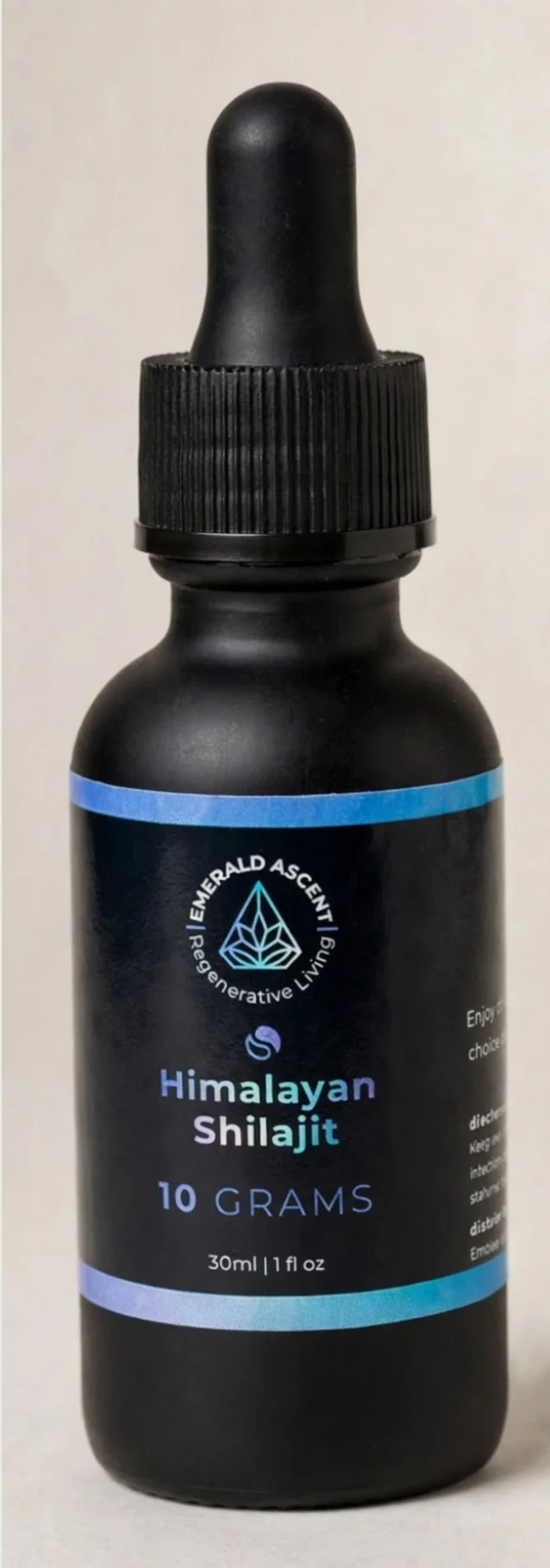
- Our drops: Himalayan resin dissolved in Appalachian spring water, nothing else.
How it is grown
Shilajit isn't farmed. It is gathered from rock faces, mostly above 10,000 feet in the Himalaya, then filtered and sun-dried. Because it comes straight from stone, it can carry heavy metals, which is why purification and a lab test matter more for shilajit than for almost any other traditional product.
Safety notes
- Choose purified shilajit with a heavy-metals test. Raw, unprocessed shilajit can contain lead, arsenic and other contaminants.
- Research on long-term use is limited.
- If you are pregnant, nursing, take medication or have a medical condition, ask your clinician first.
This page is for learning and does not replace advice from your clinician. These statements have not been evaluated by the FDA.
Check what you learned
Three quick questions to check what you learned.